
“Beyond the Headlines: The Unseen Shield Your Teen Desperately Needs – highlighting the importance of Islamic education for youth.”
What if the single most powerful tool to navigate the chaos of the modern world isn’t a new app, a trending podcast, or a self-help book, but lies in understanding the profound importance of Islamic education for youth rooted in a 1,400-year-old tradition of wisdom?”
In an era of information overload, where our youth are bombarded with conflicting messages about identity, morality, and purpose, a critical question emerges: Are we equipping them with a compass or just more noise? The answer, for millions, lies not in looking forward to the next trend, but in connecting with a timeless anchor: Islamic education. The importance of Islamic education for youth becomes clear in this context — it is not just another subject or ritual practice, but a timeless anchor that connects them to purpose, clarity, and divine guidance. This education isn’t about learning to recite Arabic without understanding, or memorizing dates for a history test. It’s about nourishing both the mind and soul with an operating system for life — one that teaches how to think, how to live, and how to find meaning in a confusing modern world.
-
The Identity Crisis Antidote: “Who Am I?” Answered with Clarity
Today’s youth are navigating a world that tells them they are merely accidental beings in a vast, meaningless universe, while simultaneously pressuring them to craft a unique “personal brand.” This is a recipe for anxiety and rootlessness.
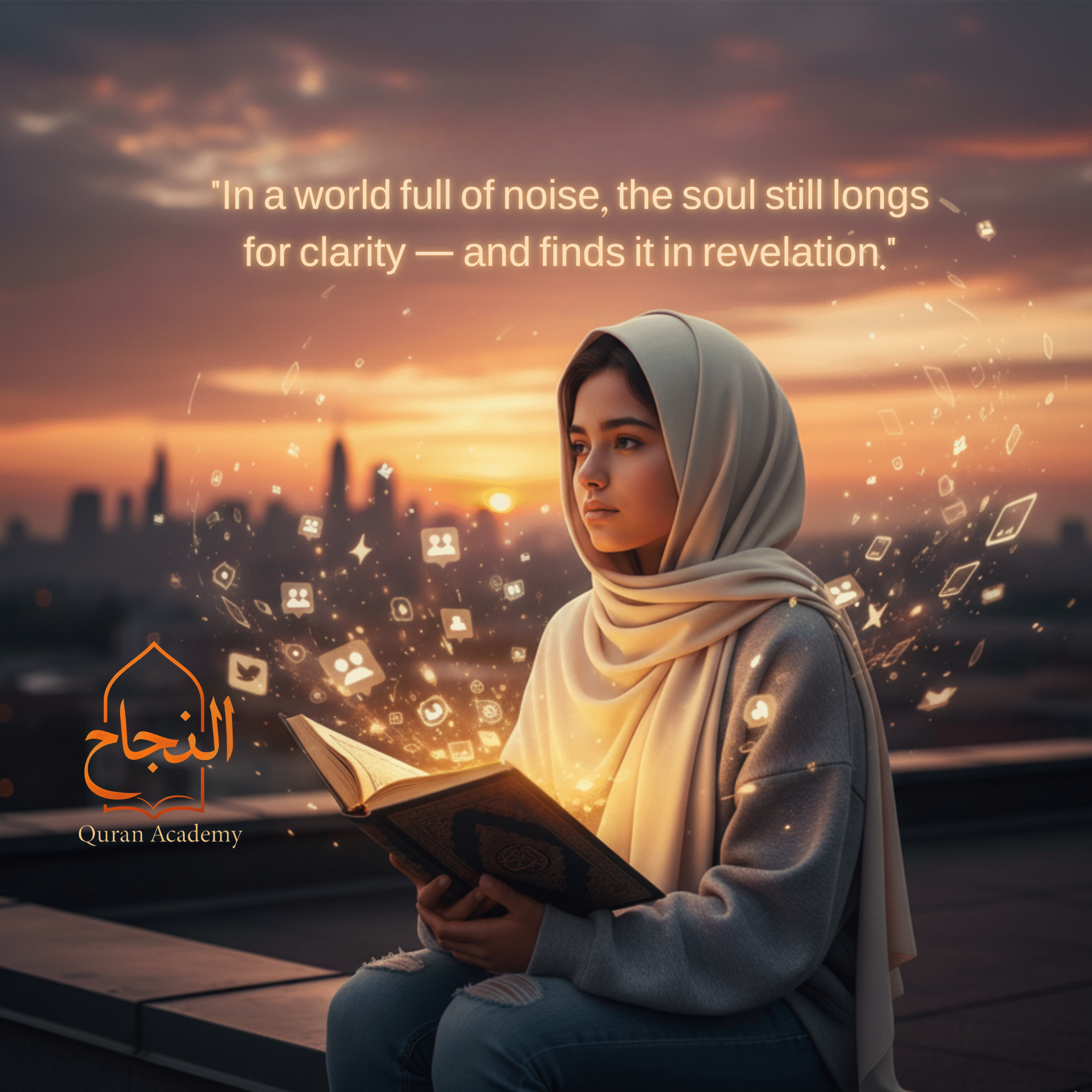
Islamic education provides the ultimate answer to the “Who am I?” question. It teaches a youth that they are a deliberate creation of an All-Wise, All-Merciful God. They are a khalifah (vicegerent) on Earth, entrusted with a noble purpose. This highlights the profound importance of Islamic education for youth in shaping their self-perception.
Allah says in the Quran:
وَمَا خَلَقْتُ الْجِنَّ وَالْإِنسَ إِلَّا لِيَعْبُدُونِ
“And I did not create the jinn and mankind except to worship Me.” (Surah Adh-Dhariyat, 51:56)
This verse isn’t about ritual alone; it’s about a life orientation. Worship, or ‘ibadah, encompasses every aspect of life—how a student studies, how a future professional conducts business, how one treats their parents and friends. It infuses every action with divine purpose.
Renowned Islamic scholar, Dr. Jeffrey Lang, a mathematician and convert, puts it powerfully: “The Quran did not just challenge my intellect; it addressed the emptiness I felt. It provided a coherent worldview where human life has intrinsic meaning and moral accountability, which is the very foundation of a stable identity.” (Lang, Jeffrey. Struggling to Surrender. Amana Publications, 1994.) When a young person internalizes this, the pressure to find worth in likes, follows, or material possessions dissolves. Their worth is inherent, given by their Creator. This foundational understanding underscores the importance of Islamic education for youth.
-
The Ultimate Moral Framework in a “Anything Goes” World
Relativism is the dominant moral philosophy today: “What’s true for you might not be true for me.” While it sounds tolerant, it often leaves young people adrift in a sea of moral ambiguity. Without a fixed north star, how do they navigate issues like bullying, academic dishonesty, substance abuse, or sexual ethics? The importance of Islamic education for youth in providing this moral clarity cannot be overstated.
Islamic education provides a clear, unwavering moral framework rooted in divine wisdom. It doesn’t just say “be good”; it defines what “good” is and why it matters.
The Prophet Muhammad (peace be upon him) was sent to perfect moral character. He said:
إِنَّمَا بُعِثْتُ لِأُتَمِّمَ مَكَارِمَ الْأَخْلَاقِ
“I have been sent only to perfect the good manners.”
(Narrated by Al-Bukhari in Al-Adab Al-Mufrad; authenticated by Al-Albani in Sahih al-Adab al-Mufrad, Hadith 273).
This isn’t a vague suggestion. It’s a mission statement. Islamic education takes this mission and translates it into practical ethics. Sheikh Hamza Yusuf, a prominent contemporary scholar, emphasizes: “Ethics in Islam are not situational. They are not based on the whims of a society. They are transcendent principles that protect human dignity and foster a just society. Teaching our youth this sacred law is an act of mercy to them and to the world they will inhabit.” (Yusuf, Hamza. The Content of Character: Ethical Sayings of the Prophet Muhammad. Sandala, 2005.) Knowing that honesty is not just a policy but a command from God, that kindness to neighbors is a form of worship, and that justice is obligatory even against oneself—this provides a powerful internal compass that peer pressure cannot easily break. Here again, the importance of Islamic education for youth shines through as a bulwark against moral relativism.
-
Critical Thinking in the Age of Misinformation
Many mistakenly believe that Islamic education discourages questioning. The reality is the exact opposite. The Quran constantly invites people to observe, reflect, and reason.
Allah repeatedly challenges the intellect:
أَفَلَا يَتَدَبَّرُونَ الْقُرْآنَ ۚ وَلَوْ كَانَ مِنْ عِنْدِ غَيْرِ اللَّهِ لَوَجَدُوا فِيهِ اخْتِلَافًا كَثِيرًا
“Then do they not reflect upon the Quran? If it had been from [any] other than Allah, they would have found within it much contradiction.” (Surah An-Nisa, 4:82)
And:
أَفَلَا يَنظُرُونَ إِلَى الْإِبِلِ كَيْفَ خُلِقَتْ، وَإِلَى السَّمَاءِ كَيْفَ رُفِعَتْ
“Have they not looked at the camel—how she was created? And at the sky—how it was raised high?” (Surah Al-Ghashiyah, 88:17-18)
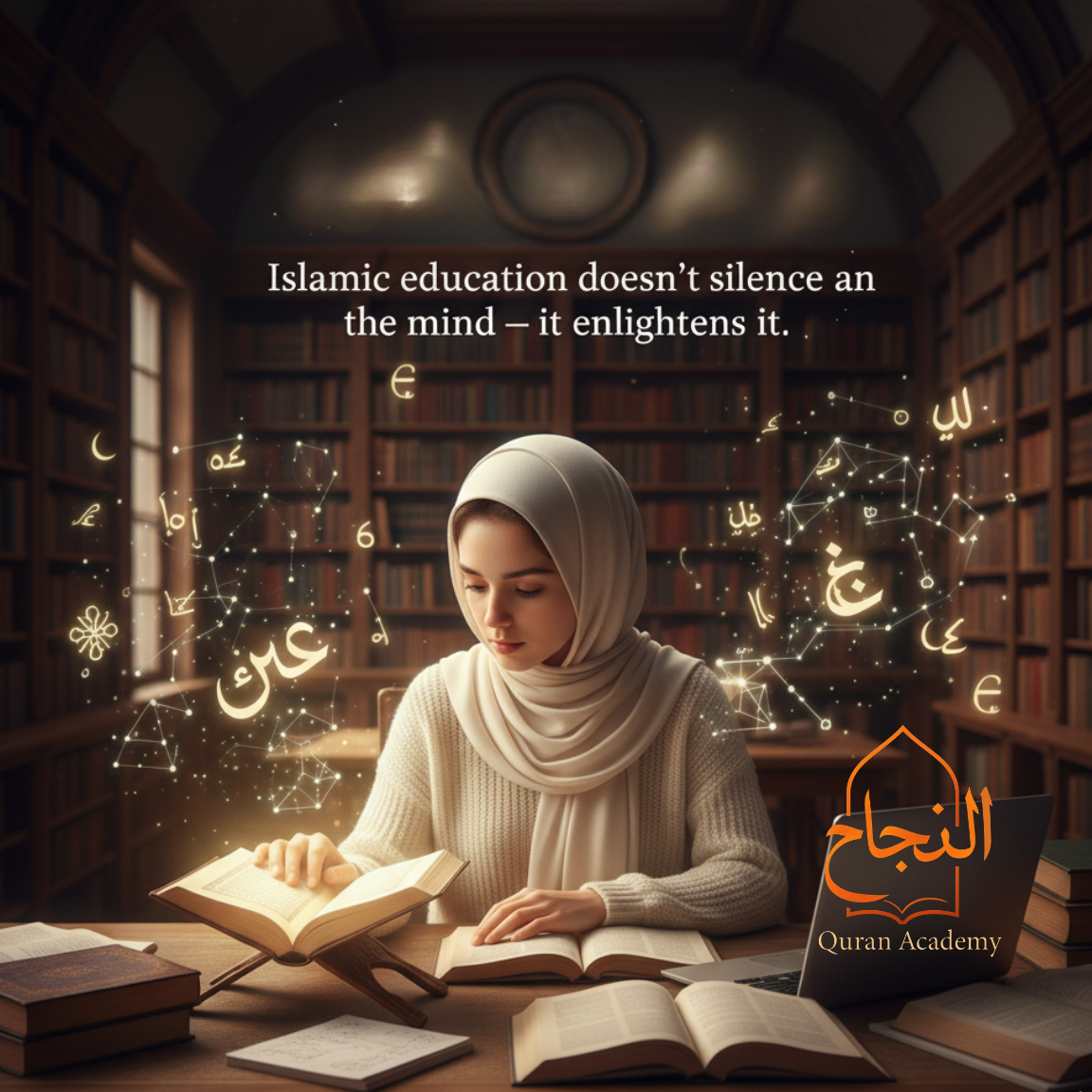
The Quranic method is to present evidence and call for reflection. A proper Islamic education doesn’t teach what to think, but how to think—critically and in light of divine revelation. It equips youth to deconstruct harmful ideologies, spot logical fallacies in modern discourse, and engage with the world as confident, thoughtful believers, not blind followers. This highlights the importance of Islamic education for youth in fostering true critical thinking.
Dr. Ingrid Mattson, an Islamic studies scholar, notes: “The Islamic intellectual tradition is a rich tapestry of theological, philosophical, and legal debate. Introducing young Muslims to this tradition shows them that faith and reason are not enemies, but complementary paths to truth.” (Mattson, Ingrid. The Story of the Quran: Its History and Place in Muslim Life. Wiley-Blackwell, 2013.)
The Call to Action: It’s Not an Extra-Curricular, It’s Essential
Viewing Islamic education as a weekend hobby is like giving a sailor a map but never teaching them how to read it. It is the essential, foundational layer that gives context, meaning, and direction to all other forms of knowledge they will acquire. This is precisely why the importance of Islamic education for youth should be prioritized.
It is the shield against existential despair, moral confusion, and intellectual deception. It is the gift of a rooted identity in a world that wants to sell them a new one every season.
The time to invest in this holistic, life-giving education is now. Don’t just give your youth information; give them a lifeline. Give them a compass. Give them the light of Islam that illuminates not just the path, but also the purpose of the journey itself. Emphasizing the importance of Islamic education for youth is an investment in their holistic well-being and future. https://alnijahquranacademy.com/online-quran-teacher/
References & Citations:
- Quran 51:56: Translation of the meaning from Sahih International.
- Lang, Jeffrey (1994): Struggling to Surrender. Amana Publications. (A foundational text exploring the intellectual and spiritual journey of a Western academic to Islam).
- Hadith on Good Manners: Al-Bukhari, Al-Adab Al-Mufrad. Graded Sahih by Al-Albani in Sahih al-Adab al-Mufrad, Hadith 273.
- Yusuf, Hamza (2005): The Content of Character: Ethical Sayings of the Prophet Muhammad. Sandala. (A compilation and commentary on the Prophet’s teachings regarding morality).
- Quran 4:82 & 88:17-18: Translation of the meaning from Sahih International.
- Mattson, Ingrid (2013): The Story of the Quran: Its History and Place in Muslim Life. 2nd Edition, Wiley-Blackwell. (An accessible academic work that contextualizes the Quran’s role and its engagement with its audience).