

I. Introduction | How to Make Wudu
Wudu, the Islamic ritual of ablution and purification, stands as one of the most fundamental practices in the Muslim faith. This cleansing ritual serves as a bridge between the physical and spiritual realms, preparing believers for their sacred communication with Allah through salah (prayer). The importance of this purification process cannot be overstated, as Prophet Muhammad (peace be upon him) clearly stated: “No salah is accepted without wudu.”
This comprehensive guide will walk you through every aspect of performing wudu correctly, from the initial intention (niyyah) to the final dua. Once you’ve completed your wudu properly, you’re ready to perform your salah with the spiritual focus and physical purity that Allah requires – learn more about perfecting your prayer in our course Noor ul Quloob: The Light of Salah.
The spiritual and physical benefits of wudu extend far beyond mere ritual washing. This purification process cleanses not only our bodies but also our hearts and minds, creating a state of spiritual readiness for worship. Regular performance of wudu promotes hygiene, mindfulness, and a constant connection with our Creator throughout the day.
II. Prerequisites and Preparation for Wudu
Before beginning the ablution ritual, understanding the concept of niyyah is crucial. Niyyah represents the sincere intention in your heart to perform wudu for the sake of Allah. This intention doesn’t require spoken words; rather, it’s a conscious mental and spiritual preparation that distinguishes ritual purification from ordinary washing.
Water requirements for wudu are straightforward yet important. The water must be pure (tahir) and purifying (mutahhir). In most cases, regular tap water suffices, but in certain regions, particularly warmer climates, water safety becomes a concern. If you’re in an area where water might contain harmful organisms like naegleria fowleri, boil the water for one minute (three minutes at higher elevations) and allow it to cool before use, especially for nasal rinsing.
Wudu becomes obligatory before performing any salah, whether obligatory or voluntary. Additionally, it’s required before touching the Quran, performing tawaf around the Kaaba, and is highly recommended before sleeping, making dhikr, or entering the mosque.
For valid wudu, certain conditions must be met: you must be Muslim, of sound mind, have reached the age of discernment, have pure water available, and ensure nothing prevents water from reaching the skin (like waterproof substances).
III. How to Perform Wudu: Step-by-Step Guide
A. Beginning Your Wudu
The journey of purification begins with forming the intention in your heart. Center yourself, quiet your thoughts, and focus on the sacred act you’re about to perform. This mental preparation transforms routine washing into spiritual cleansing.
Next, say “Bismillah” (In the name of Allah). You may pronounce it audibly or silently, whichever brings you more focus and comfort. This invocation marks the formal beginning of your ablution ritual.
B. The Complete Wudu Process
1. Washing Hands (3 times)
Begin with your right hand, following the sunnah of starting with the right side. Use your left hand to pour water over your right hand, washing thoroughly from fingertips to wrists three times. Ensure water reaches between your fingers and covers every surface. Then, use your right hand to wash your left hand in the same manner, three times.
2. Rinsing Mouth (3 times)
Cup water in your right hand and take it into your mouth. Swish the water thoroughly around your cheeks and through your teeth, ensuring complete cleansing of the oral cavity. Expel the water and repeat this process three times. This step, known as madmadah, purifies your mouth for the sacred words of prayer.
3. Cleaning Nose (3 times)
Using your right hand, cup water and gently sniff it into your nostrils, then blow it out using your left hand to clean your nose. This process, called istinshaq and istinthar, should be done three times. Be careful not to inhale too forcefully to avoid discomfort. If you cannot sniff water, wet your fingers and clean the lower part of your nostrils.
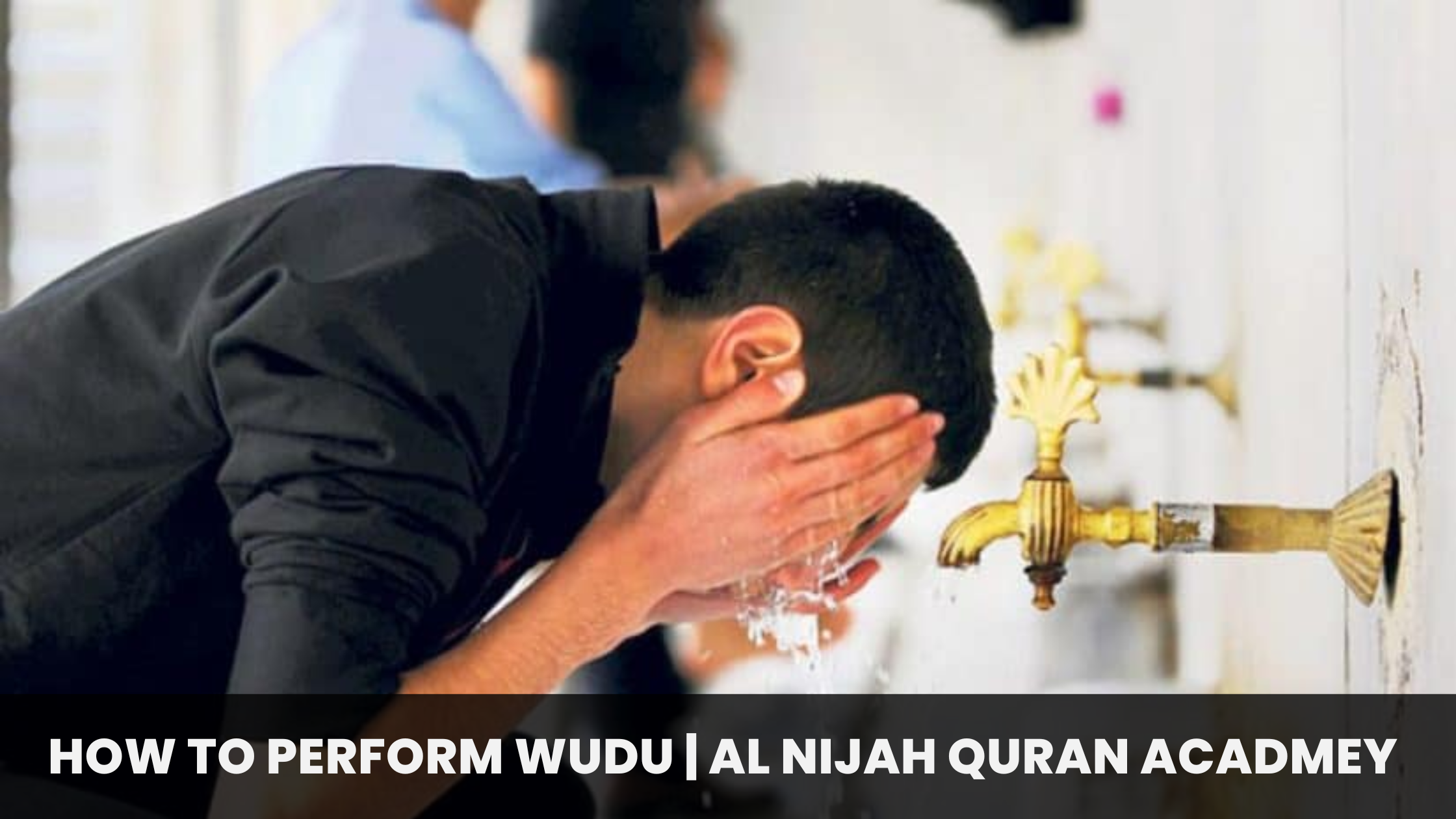
4. Washing Face (3 times)
Define your face area from ear to ear horizontally and from the hairline to the bottom of your chin vertically. Using both hands, wash this entire area three times, ensuring no part remains dry. For men with beards, pass your wet fingers through the beard to ensure water reaches the skin beneath.
5. Washing Arms (3 times each)
Start with your right arm, washing from fingertips to elbow, including the elbow itself. Use your left hand to pour and rub water over your right arm, ensuring complete coverage. Repeat three times, then perform the same action on your left arm using your right hand. If wearing a cast or bandage for medical reasons, simply wipe over it.
6. Wiping Head (Once)
This step, known as masah, differs from washing. Wet your hands and wipe your entire head once, moving from the forehead to the back of the head, then returning from the back to the forehead. This can be done in one continuous motion or two separate movements. Those with long hair should wipe over it without undoing braids or styles.
7. Cleaning Ears (Once)
Using the same wetness from wiping your head, clean your ears by inserting your index fingers into your ears while using your thumbs to clean behind them. This is performed once, ensuring both the visible and hidden parts of your ears are purified.
8. Washing Feet (3 times each)
Complete your wudu by washing your feet, beginning with the right foot. Wash from toes to ankles, ensuring water reaches between each toe and covers the entire foot including the heel and ankle. Use your pinky finger to clean between toes if necessary. Repeat three times for the right foot, then three times for the left foot.
C. Completing Your Wudu
After completing all physical washing, raise your index finger and recite the shahada:
“Ash-hadu an la ilaha illallah wa ash-hadu anna Muhammadan ‘abduhu wa rasuluh”
(I testify that there is no deity worthy of worship except Allah, and I testify that Muhammad is His servant and messenger)
Follow this with the dua:
“Allahumma-j’alni minat-tawwabina wa-j’alni minal-mutatahhirin”
(O Allah, make me among those who repent and make me among those who purify themselves)
“The requirement of being in a state of wudu before touching the Quran is based on verse 56:79, which you can read with various translations at Quran.com”
Maintaining the correct order (tartib) throughout wudu is essential. If you make a mistake in the sequence, you must restart from the beginning to ensure your ablution is valid.
IV. Sunnah of Ablution
A. Recommended Practices from Prophet Muhammad (PBUH)
The Prophet’s method of performing wudu provides us with beautiful sunnah practices that enhance our purification. Using miswak (tooth stick) before wudu was his regular practice, promoting both spiritual and dental hygiene. He consistently started with the right side for all paired body parts, demonstrating the importance of this preference.
The Prophet (peace be upon him) would run his fingers between his toes and fingers, ensuring thorough cleansing. For those with beards, he would pass his wet fingers through it during face washing. Despite the emphasis on thoroughness, he was known for conserving water, using only about 0.6 liters for complete wudu.
B. Additional Sunnah Acts
Performing wudu at home before heading to the mosque multiplies your rewards, as each step to the mosque with wudu earns blessings. The Prophet encouraged renewing wudu even when it hadn’t been nullified, calling it “light upon light.”
Sleeping with wudu brings protection and blessings throughout the night. The Prophet said that whoever sleeps in a state of purity will have an angel appointed to them who seeks forgiveness for them throughout their sleep.
C. Virtues and Rewards
The spiritual rewards of proper wudu are immense. The Prophet informed us that when a Muslim performs wudu properly, their sins fall away from their body with the water droplets. On the Day of Judgment, his ummah will be recognized by the radiant marks of wudu on their faces, hands, and feet.
V. Wudu for Women
A. General Guidelines
Women perform wudu following the exact same steps as men, with no fundamental differences in the core ablution process. The same body parts are washed in the same order with the same frequency. This equality in worship requirements reflects Islam’s universal approach to spiritual purification.
B. Special Considerations
Nail polish presents a common concern for women, as it creates a barrier preventing water from reaching the nails. Most scholars agree that nail polish must be removed before wudu for the ablution to be valid. However, breathable nail polish that allows water penetration may be permissible according to some contemporary scholars.
Makeup that forms a barrier must be removed from areas that require washing during wudu. However, if makeup is water-permeable and doesn’t prevent water from reaching the skin, it need not be removed. When wiping the head, women should wipe over their hijab or head covering if it was worn while in a state of wudu.
C. Women-Specific Situations
During menstruation, women are exempt from prayer and therefore don’t need to perform wudu for salah. However, they may perform wudu for other acts of worship like dhikr or reading Quran from memory. After childbirth (nifas), women should perform ghusl (full ritual bath) before resuming prayers, after which regular wudu requirements apply.
VI. Does Eating Break Wudu?
A. General Rule
One of the most common misconceptions about wudu involves eating and drinking. The general rule is clear: eating does NOT break wudu, and drinking does NOT break wudu. You can maintain your state of ritual purity while consuming food or beverages.
B. Exceptions and Clarifications
The only food-related debate among scholars concerns camel meat. The Hanbali school of thought maintains that eating camel meat nullifies wudu based on specific hadith, while other schools disagree. Most Muslims follow their local scholarly opinion on this matter.
Vomiting, which might occur after eating, is what actually breaks wudu according to some schools of thought—not the act of eating itself. The Hanafi school considers vomiting a mouthful or more as nullifying wudu, while other schools have different criteria.
C. Related Misconceptions
Many Muslims mistakenly believe that touching food, especially during cooking, breaks wudu. This is incorrect. Similarly, some think that hot food or spicy food affects wudu—these are cultural myths with no Islamic basis. The key is understanding that natural bodily discharges nullify wudu, not the consumption of food itself.
VII. What Breaks (Nullifies) Wudu
A. Major Nullifiers
Understanding what breaks wudu is crucial for maintaining ritual purity. The primary nullifiers include:
- Natural bodily discharges: urination, defecation, and passing gas
- Deep sleep where consciousness is lost
- Loss of consciousness due to fainting, intoxication, or insanity
- Touching private parts directly (according to Shafi’i and Hanbali schools)
B. Detailed Explanations
Passing gas, regardless of sound or smell, breaks wudu as it’s considered a natural discharge. Any discharge from the front or back private parts nullifies wudu, including unusual discharges due to illness.
Bleeding is a point of scholarly difference. The Hanafi school considers excessive bleeding from any part of the body as breaking wudu, while other schools focus only on discharges from private parts. Nosebleeds, according to Hanafis, break wudu if blood flows beyond the nostrils.
C. Doubtful Situations
Light dozing while sitting upright generally doesn’t break wudu according to most scholars, as long as you remain aware of your surroundings. However, deep sleep in any position nullifies wudu.
When uncertain whether wudu has been broken, the principle of certainty applies: if you’re certain you had wudu but doubtful whether you broke it, assume it’s still valid. Conversely, if you’re certain you broke wudu but unsure if you renewed it, assume you need to perform wudu again.
VIII. Special Circumstances and Exceptions
A. Wudu with Limited Water
In situations where water is scarce or unavailable, Islam provides the alternative of tayammum (dry ablution) using clean earth or dust. This substitution demonstrates Islam’s practical approach to worship, ensuring that purification remains possible in all circumstances.
When water is limited but available, perform a modified wudu using the minimum amount necessary to wet each required body part once instead of three times.
B. Medical Conditions
Those with casts, bandages, or medical devices should wipe over them during wudu rather than removing them if removal would cause harm. Chronic conditions that cause continuous discharge (like incontinence) have special rulings—affected individuals perform wudu for each prayer time and maintain it despite involuntary discharges during prayer.
Elderly or disabled Muslims who cannot perform standard wudu may have assistance or perform it while seated. The key principle is doing what one is capable of while maintaining the essence of purification.
C. Travel and Emergency Situations
Performing wudu on airplanes requires planning. Use the lavatory sink carefully, being considerate of other passengers. In extreme cold, where frostbite is a concern, tayammum becomes permissible if using water would cause genuine harm.
Time constraints before prayer shouldn’t lead to rushed, invalid wudu. It’s better to perform proper wudu and pray late with an excuse than to pray on time with improper purification.
IX. Common Mistakes to Avoid
Many people rush through wudu, not allowing water to reach all required areas. Each body part must be thoroughly washed, with water reaching every surface. Forgetting the correct order necessitates starting over, as tartib (sequence) is obligatory in many schools of thought.
Wasting water contradicts prophetic practice. The Prophet performed complete wudu with less than a liter of water. Using excessive water doesn’t increase purification—it demonstrates wastefulness.
Forgetting to say Bismillah at the beginning is common but significant. While some schools consider it obligatory and others sunnah, all agree on its importance. If forgotten at the start, say it when remembered.
X. Frequently Asked Questions
Can I perform wudu with socks on?
Yes, if you wore socks while in a state of wudu, you may wipe over them instead of removing them for subsequent wudus. This applies to socks that cover the ankles and are not transparent.
How long does wudu last?
Wudu remains valid until nullified by one of the breaking factors mentioned earlier. There’s no time limit—you could theoretically maintain wudu for days if none of the nullifying actions occur.
Can I talk during wudu?
Yes, talking during wudu is permissible, though maintaining focus on the act of purification is recommended. Avoid excessive conversation that distracts from the spiritual aspect of ablution.
What if I forget a step?
If you realize immediately, perform the missed step and continue. If significant time has passed and the previous parts have dried, most schools require starting over to maintain continuity (muwalah).
Is wudu valid with waterproof makeup?
Waterproof makeup that prevents water from reaching the skin must be removed from areas requiring washing. The principle is that water must touch the actual skin for valid purification.
XI. Conclusion
Mastering the art of wudu transforms a daily ritual into a profound spiritual experience. This comprehensive guide has covered every aspect of ablution, from basic steps to complex scenarios, ensuring you can perform this essential act of worship with confidence and correctness.
Remember that wudu is more than physical cleansing—it’s a spiritual preparation that purifies your heart and mind for communion with Allah. Each drop of water that touches your skin during proper wudu removes sins and increases your spiritual light.
Regular practice makes perfect. The more mindfully you perform wudu, the more natural and spiritually uplifting it becomes. Whether you’re teaching others, perfecting your own practice, or navigating special circumstances, return to these guidelines whenever needed.
May Allah accept our purification and prayers, and may this guide serve as a continuous source of benefit for all who seek to perfect their worship. Remember, the journey of faith is one of constant learning and improvement, and perfecting your wudu is a beautiful step on that path.
XII. Additional Resources
For continued learning, consult authentic hadith collections like Sahih Bukhari and Sahih Muslim for prophetic traditions regarding purification. Seek knowledge from qualified local scholars who can address specific situations according to your followed school of thought.
Consider downloading reputable Islamic apps that provide wudu reminders and step-by-step guides for quick reference. Join local mosque classes on Islamic jurisprudence (fiqh) to deepen your understanding of purification and prayer.
Remember, seeking knowledge about proper worship is itself an act of worship. May your journey in perfecting your wudu bring you closer to Allah and increase your spiritual awareness in all aspects of life.